Manufacturing Process Guide for B2B Screen Buyers
For wholesalers, distributors, importers and professional repair businesses, the quality of a replacement screen depends on much more than whether the product is labeled “OLED.”
An aftermarket OLED screen for a Samsung phone is assembled through multiple stages involving panel preparation, IC and FPC bonding, precision cutting, optical lamination, functional testing, fingerprint-module installation and frame assembly.
Understanding this process can help B2B buyers evaluate why two visually similar replacement screens may perform differently in touch response, fit, stability and defect rate.
WOSENTE supplies multiple Samsung Phone Screens for professional repair and wholesale markets. This guide explains the main manufacturing and assembly stages behind aftermarket Samsung OLED replacement screens.
1. What Components Make Up an Aftermarket OLED Screen?
Before looking at the production process, it is useful to understand the main parts of the complete screen assembly.
1.1 Main Screen Components
A Samsung aftermarket OLED screen assembly can include:
- OLED display panel
- FPC flex cable
- Front glass
- Back sticker
- Fingerprint module on applicable models
- Frame on with-frame versions
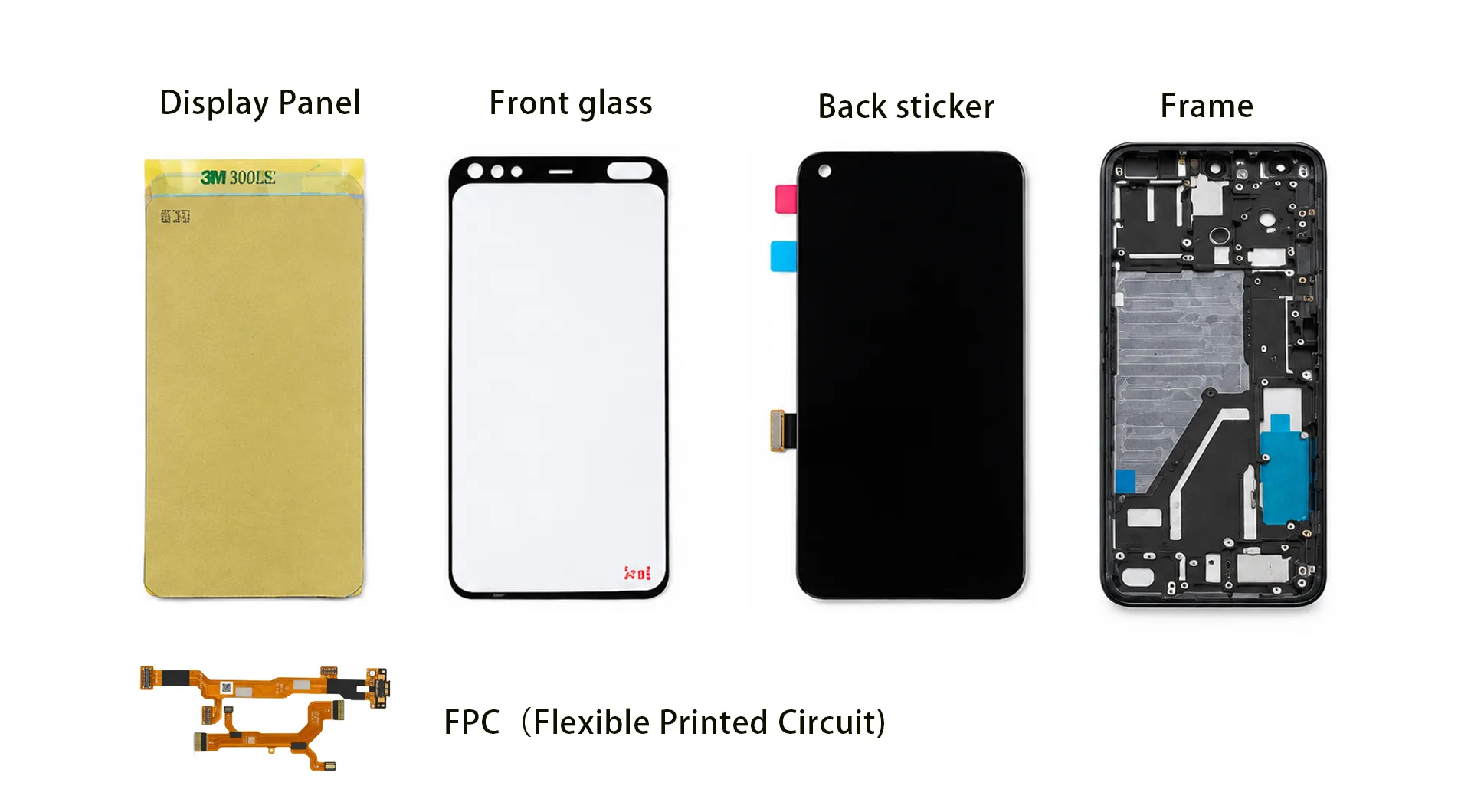
Each component has a different function, but final screen quality depends on how accurately these parts are processed, bonded and tested together. A good display panel alone does not guarantee a reliable finished screen. Bonding accuracy, optical cleanliness, FPC stability and frame fit can all affect the final result.2. Glass Inspection and Polarizer Lamination
The production flow begins with inspected glass. Before the glass continues through the assembly line, it is checked for defects and prepared for polarizer lamination.
2.1 Automated Polarizer Lamination
Automated equipment applies the polarizer to the inspected glass. In the production process shown in the manufacturing script, a high-precision vision system monitors positioning and controls alignment tolerance within approximately 0.1 mm. Accurate alignment matters because small positioning errors introduced at an early stage can affect later bonding and assembly steps.
The goal at this stage is simple: prepare a clean and accurately aligned glass component before electronic bonding begins.
3. Driver IC and FPC Bonding
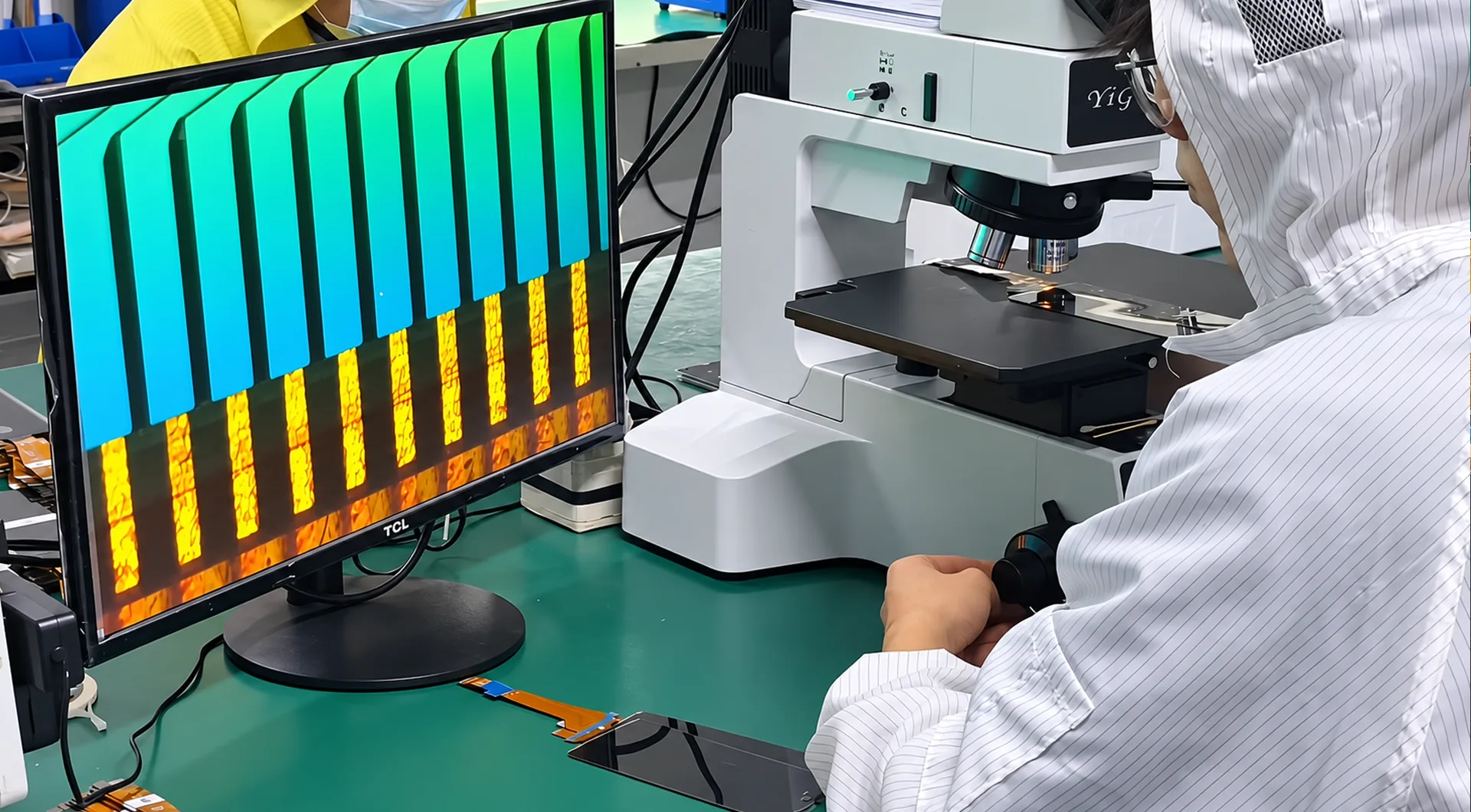
One of the most important stages is connecting the electronic components to the OLED display panel. This involves two main bonding operations.
3.1 Primary Bonding: Driver IC to Display Panel
The first bonding stage integrates the driver IC with the display panel. Before bonding, the contact area is cleaned using alcohol wiping and plasma cleaning. The purpose is to prepare a clean bonding surface.
An anisotropic conductive film (ACF) is then applied precisely to the bonding area. After that, the driver IC is positioned over the panel. High-definition camera systems identify and align the small components before controlled temperature and pressure are applied to pre-secure the IC.
This stage requires accurate positioning because the driver IC is responsible for communication between the screen electronics and the display.
3.2 Secondary Bonding: FPC to Display Panel
The next step connects the FPC to the panel. The FPC contact area goes through a similar preparation process: plasma cleaning, ACF application, visual alignment and controlled pressing. After precise alignment, the FPC and panel are permanently pressed together. Protective antioxidant adhesive is then applied around the connection area to provide additional protection.
4. Inspection After Electronic Bonding
Bonding is not followed immediately by the next assembly step. The bonded display must first be inspected.
4.1 Manual Inspection
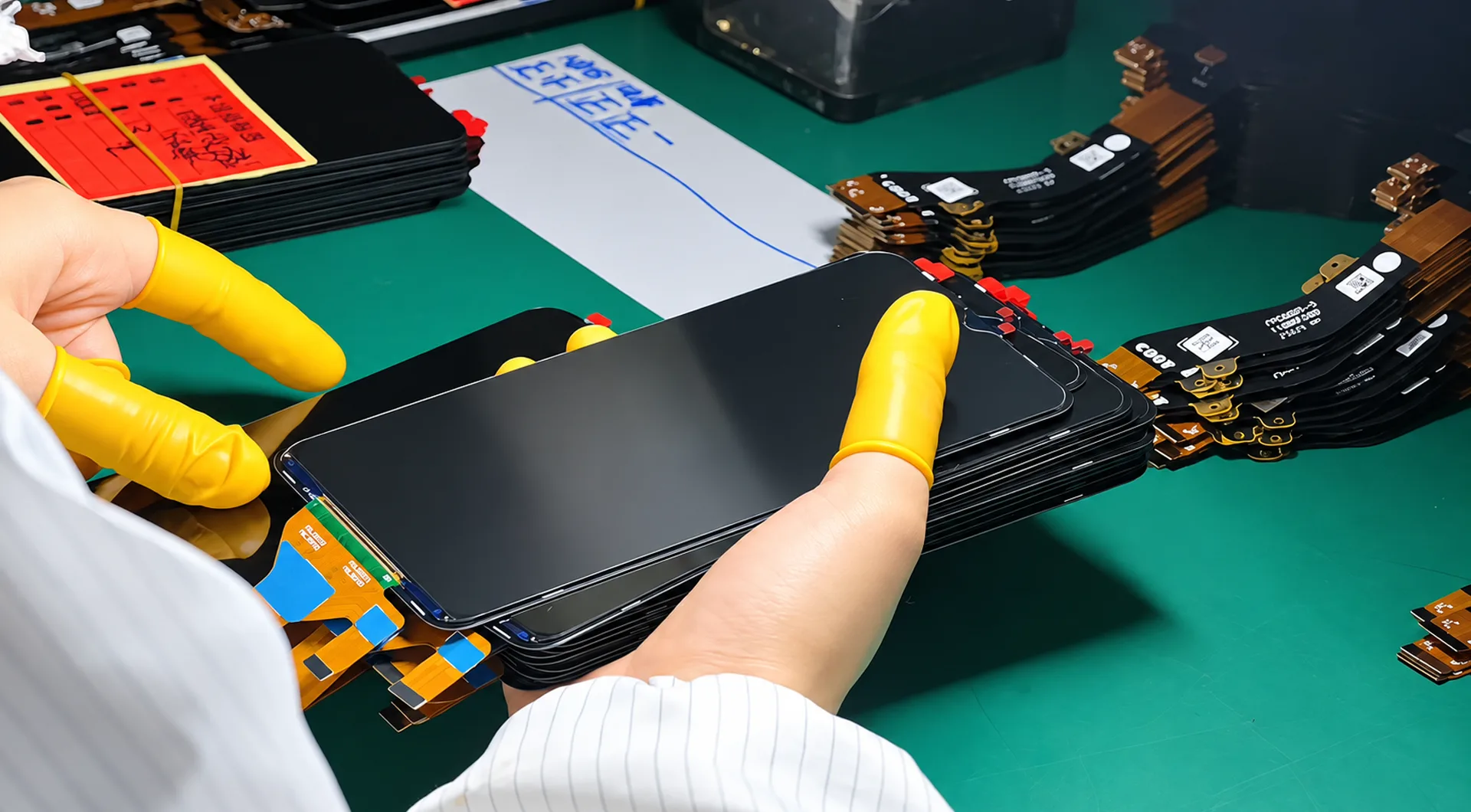
Operators visually inspect the bonded panel for assembly defects. The panel is then powered on to check basic touch response. If a defect is detected at this stage, the panel should be rejected instead of continuing through additional assembly processes.
This type of process control is important for bulk buyers because discovering a defective panel early is more efficient than identifying the problem after the screen has been fully laminated and framed. For buyers evaluating a supplier, the overall Mobile Phone Parts Quality Control process is therefore as important as the screen specification itself.
5. Precision Laser Cutting
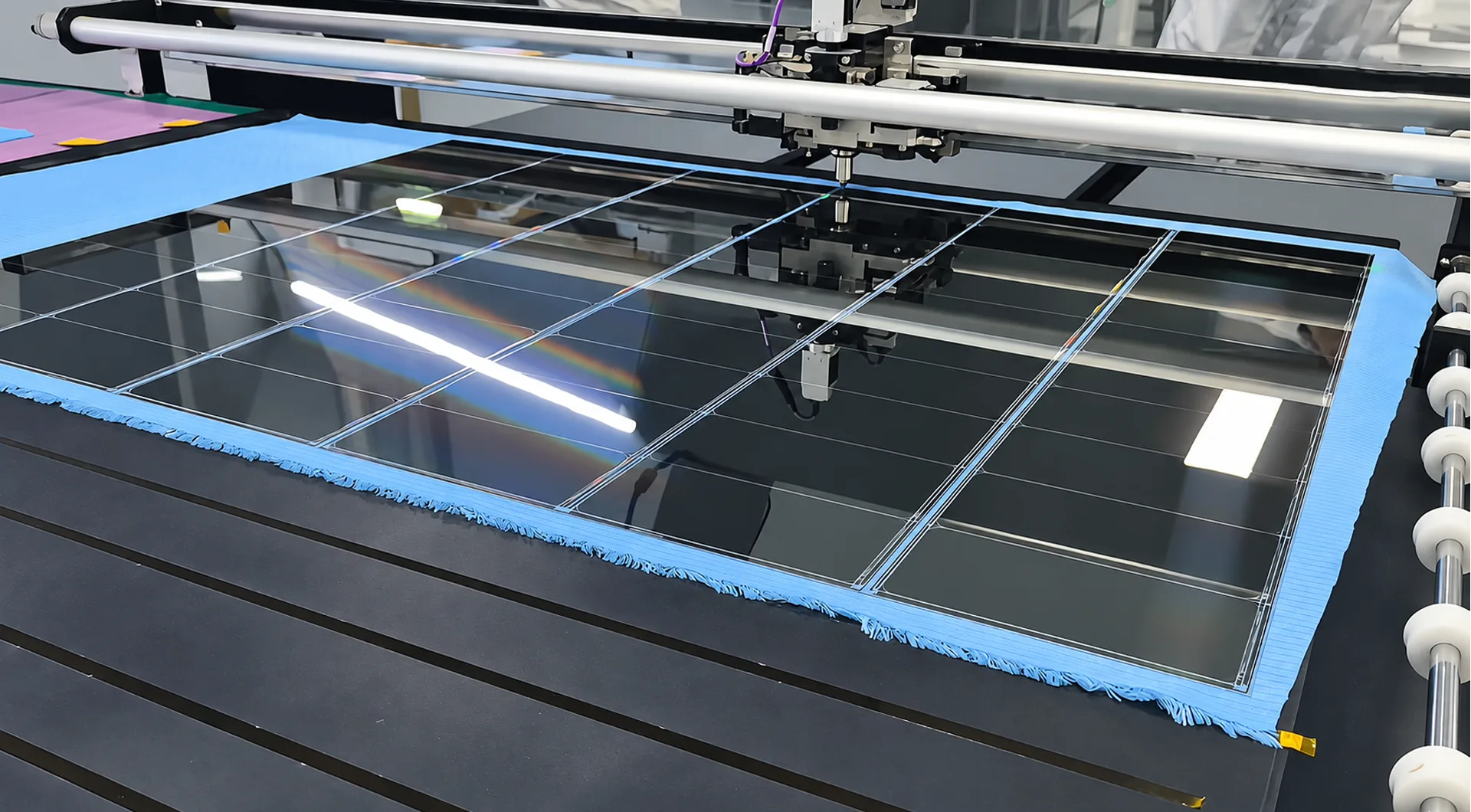
After the electronic bonding stage has passed inspection, the OLED panel moves to laser processing.
5.1 Camera Holes and Corner Profiles
High-precision laser equipment cuts the required panel profile, including camera punch holes, viewing windows, rounded corners and model-specific screen contours. Model-specific molds and positioning are used to control the cutting geometry.
For Samsung replacement screens, this stage is particularly important because the camera opening, sensor area and screen contour need to fit the corresponding phone structure accurately. Poor profile accuracy can create installation or alignment problems later in the repair process.
6. OCA Lamination and Bubble Removal
The next major stage joins the front glass and display panel. This is one of the most visually sensitive parts of the screen assembly process.
6.1 Glass Inspection Before Lamination
Before lamination, the front glass is inspected under high-intensity scattered light. Operators check for small stains, dust, scratches and surface defects. Keeping the contact area clean is critical because particles trapped between the glass and OLED panel can remain visible after lamination.
6.2 OCA Application
After inspection, OCA optical adhesive is applied. The screen and glass are positioned in the lamination equipment, and their protective films are removed. Vacuum suction systems then grip and align the components before lamination. The objective is to achieve consistent positioning between the OLED panel, OCA layer and front glass.
6.3 Autoclave Bubble Removal
After lamination, the screen is checked for bonding quality and remaining bubbles. The screens are then placed in an autoclave for final microbubble removal. After this process, another inspection verifies that the laminated screen is tightly bonded and free from visible trapped bubbles.
7. Back Sticker and FPC Protection
Once the optical assembly is complete, the rear side of the screen is prepared.
7.1 Back Sticker Application
Robotic equipment applies the back sticker to the screen. Automated pressing then secures the sticker. The FPC is subsequently positioned and fixed to the back of the assembly.
7.2 FPC Routing
Adhesive is applied before the FPC is fixed along its required path. Automated equipment guides and folds the FPC according to a preset route to reduce unnecessary stress on the flex cable. Protective film is also applied to exposed FPC areas.
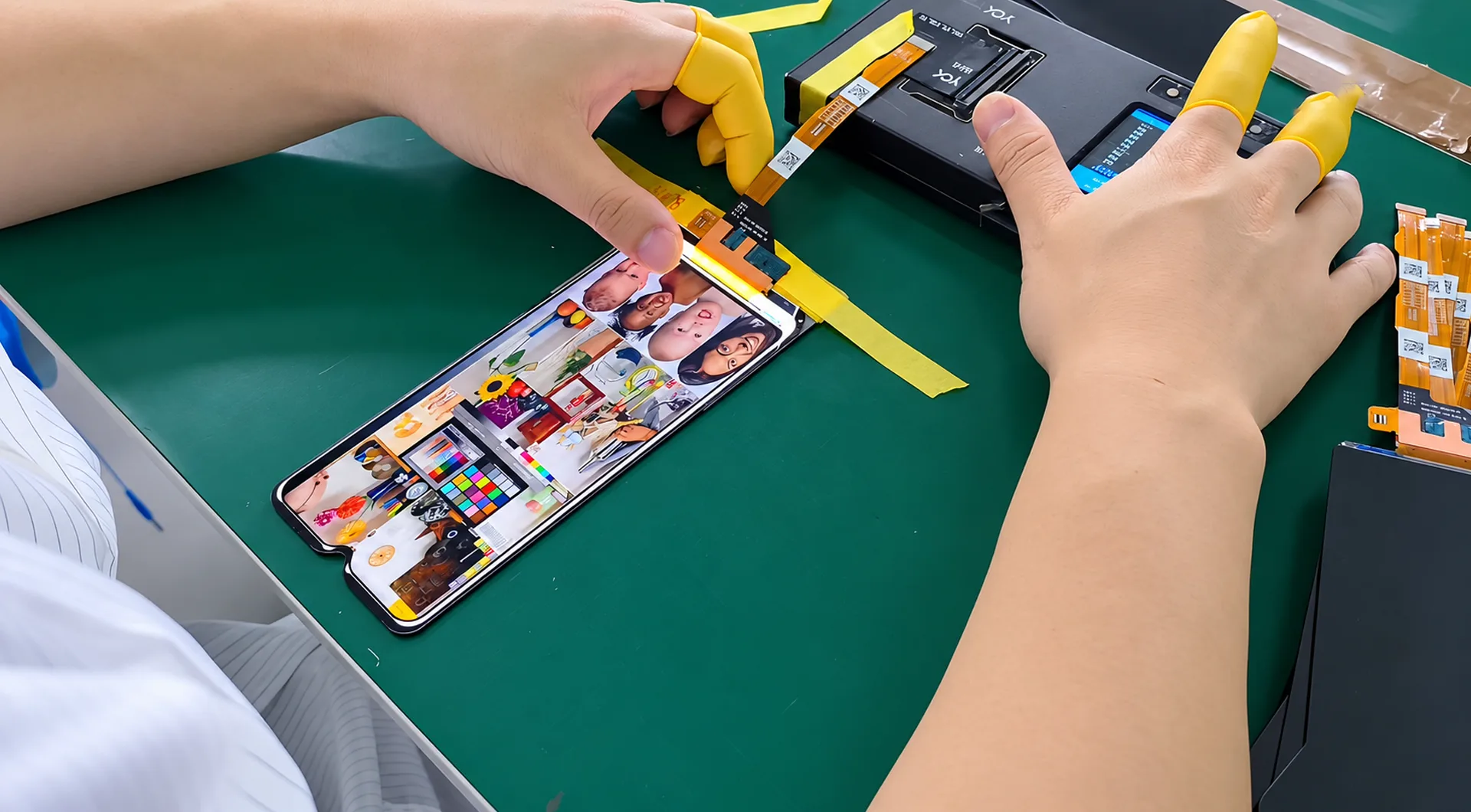
After the FPC assembly is completed, the screen undergoes a comprehensive touch-function test. The test checks for problems such as touch dead zones, ghost touch and inconsistent touch response. Only screens that pass the functional check continue to the next stage.
8. Fingerprint Module Installation and Function Testing
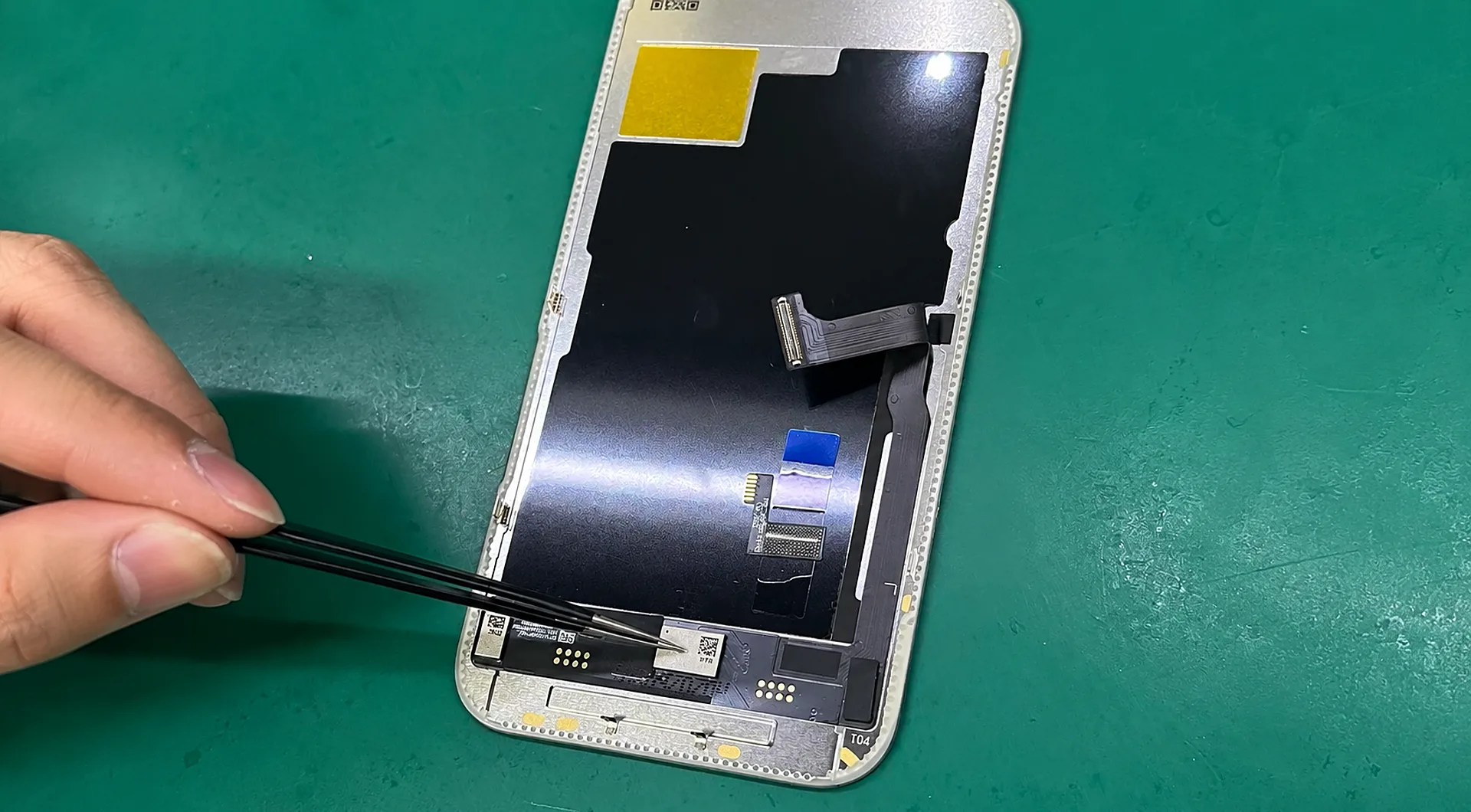
For Samsung models using an under-display fingerprint system, the fingerprint module requires an additional assembly step.
8.1 Fingerprint Module Alignment
Optical adhesive is applied evenly before the module is positioned into its designated screen window. Precise alignment is important because the module must correspond correctly with the fingerprint recognition area.
8.2 Fingerprint and S Pen Testing
Before frame installation, applicable functions are tested again. Depending on the Samsung model, this can include fingerprint recognition and S Pen functionality. This test helps identify functional problems before the screen is permanently assembled with the frame.
9. Frame Assembly
For screens supplied with a frame, the final mechanical assembly stage joins the display assembly to the frame.
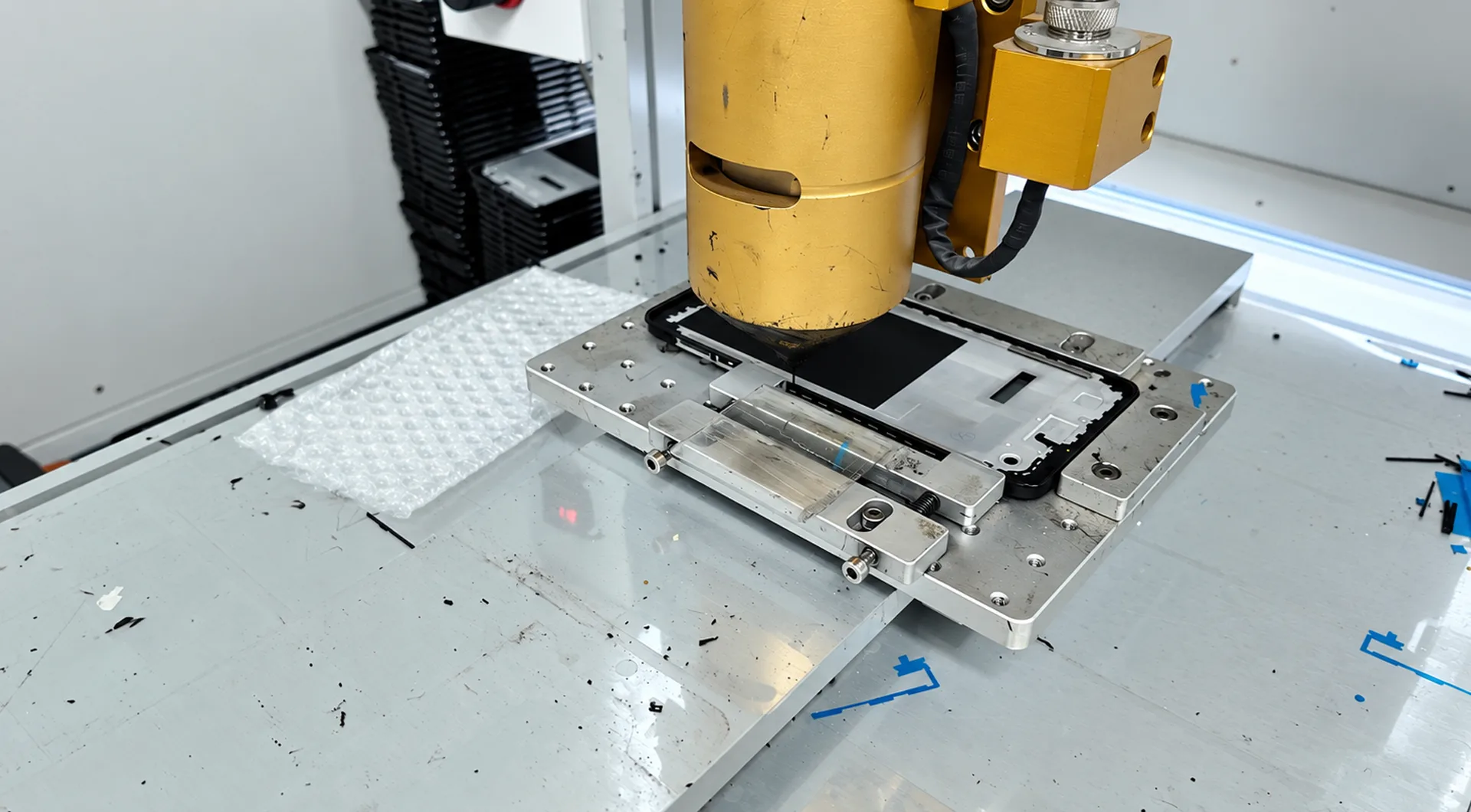
9.1 Automated Adhesive Dispensing
Automated dispensing equipment applies adhesive along a predefined path. Controlling the glue position and quantity helps improve frame bonding, sealing, screen alignment and flush fit. After positioning, the screen and frame are pressed together and cured. A final protective film is then applied to complete the physical assembly.
WOSENTE offers Samsung replacement-screen options for different repair requirements. Buyers can review available models through the Samsung Phone Screens page.10. Final Testing and Batch Verification
Completing the assembly does not automatically mean a screen is ready for shipment. The finished product still requires final verification.
10.1 Finished-Screen Inspection
Important checkpoints throughout the process include:
- Display operation
- Touch response
- Dead zones and ghost touch
- Lamination bubbles
- FPC connection
- Fingerprint function on applicable models
- S Pen function on applicable models
- Frame fit and assembly condition
10.2 Secondary Batch Testing
The production script also shows a secondary full-scale testing stage after products leave the production line. This is an important concept for B2B procurement. A supplier should not evaluate quality only by checking one pre-production sample. Batch-level inspection helps identify differences that may appear across larger orders.
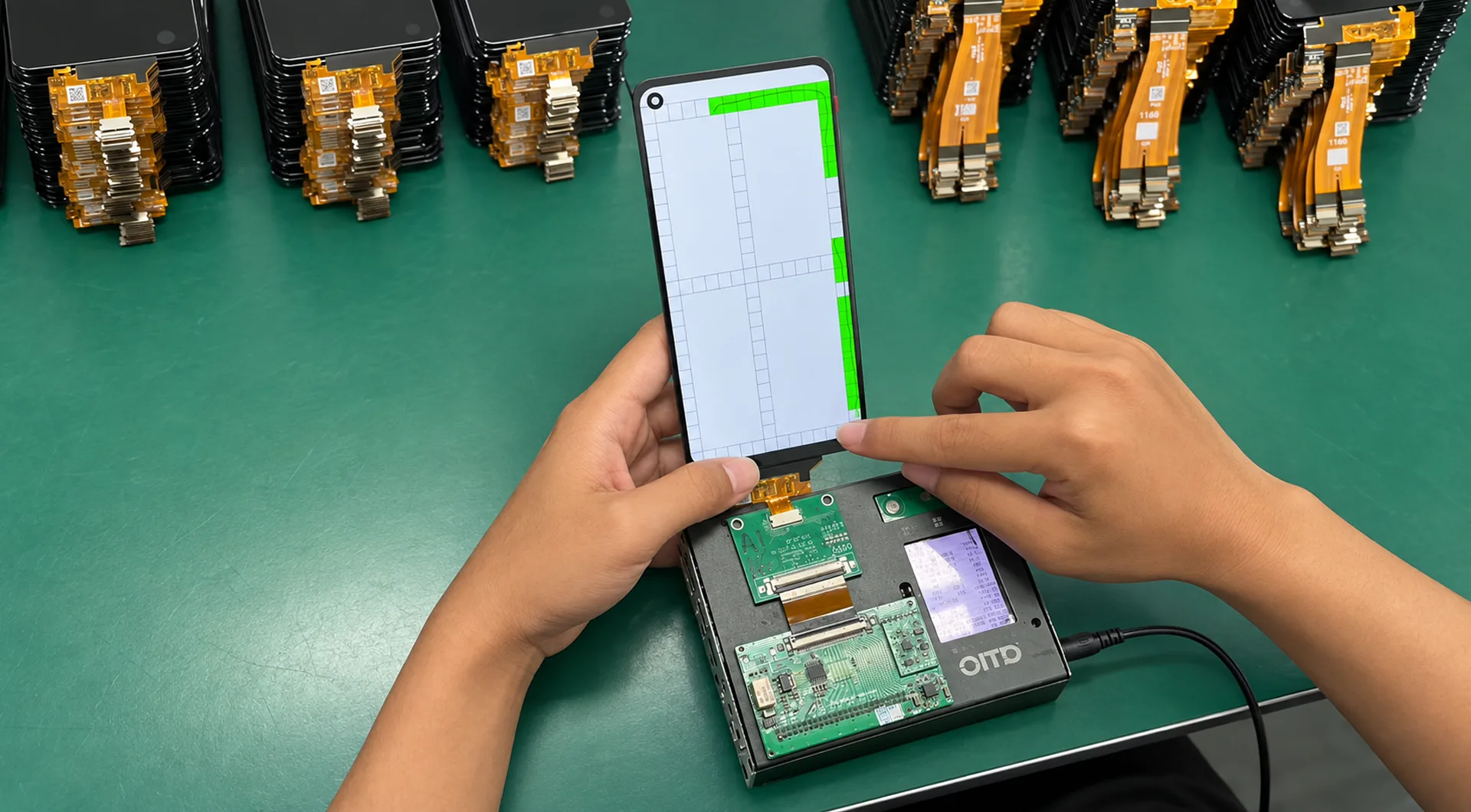
WOSENTE’s quality-control process is designed around inspection of mobile phone parts before shipment, helping professional buyers control incoming quality across wholesale orders.11. What Should B2B Buyers Check When Sourcing Samsung Aftermarket OLED Screens?
Understanding the manufacturing process also makes supplier evaluation easier. Before placing a bulk order, buyers should confirm several points.
11.1 Exact Screen Specification
Confirm:
- Samsung model
- OLED type or quality grade
- With-frame or without-frame configuration
- Fingerprint compatibility where applicable
- Required quantity
Different aftermarket OLED products should not be compared only by unit price.
11.2 Functional Testing
Ask how the supplier checks:
- Display function
- Touch accuracy
- Dead pixels
- Touch dead zones
- Ghost touch
- Fingerprint functionality
- S Pen compatibility where applicable
11.3 Lamination and Appearance
For completed OLED assemblies, check:
- Dust
- Bubbles
- Scratches
- Glass alignment
- Camera-hole accuracy
- Frame fit
11.4 Batch Consistency
A good sample is useful, but wholesale buyers also need consistent quality across the complete shipment. This is particularly important for distributors and repair chains ordering hundreds or thousands of replacement screens.
11.5 Packaging and Shipment Protection
OLED screens contain sensitive glass, panel and flex-cable components. After production and inspection, proper packaging becomes part of quality protection during international transportation. WOSENTE’s Packaging & Fulfillment process covers packaging and order preparation for B2B shipments.
12. Aftermarket OLED vs Service Pack: Do Not Confuse the Two
An aftermarket OLED screen and a Service Pack screen are not the same product category. The manufacturing process described in this article relates to aftermarket replacement OLED screen assembly.
For buyers specifically looking for Service Pack products, see WOSENTE’s Service Pack Screens page. Keeping these categories separate helps buyers compare quotations correctly and choose the appropriate screen grade for each repair channel.
13. Conclusion
A Samsung aftermarket OLED screen is not produced in one simple assembly step. The process includes glass preparation, polarizer lamination, IC bonding, FPC bonding, laser cutting, OCA lamination, bubble removal, rear-side assembly, touch testing, fingerprint-module installation, frame bonding and final quality verification.
For B2B buyers, knowing these stages makes it easier to understand why supplier quality can vary even when two products use the same general “aftermarket OLED” description.
The key purchasing question should therefore not be only “How much does the screen cost?” It should also be “How is the screen assembled, tested and controlled before shipment?”
For wholesalers, distributors, importers and professional repair businesses looking for Samsung replacement screens, WOSENTE provides wholesale supply support through its Wholesale Business service. For model availability, screen specifications or bulk quotations, Contact WOSENTE.